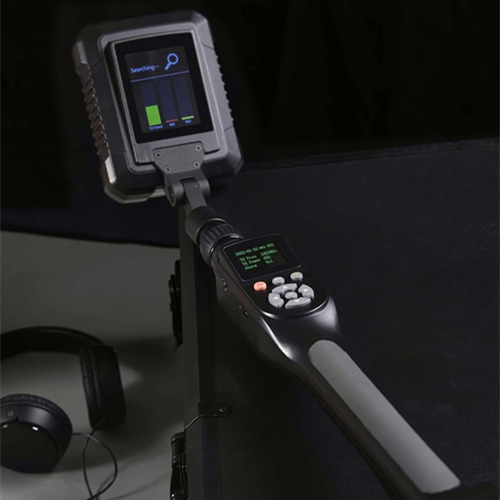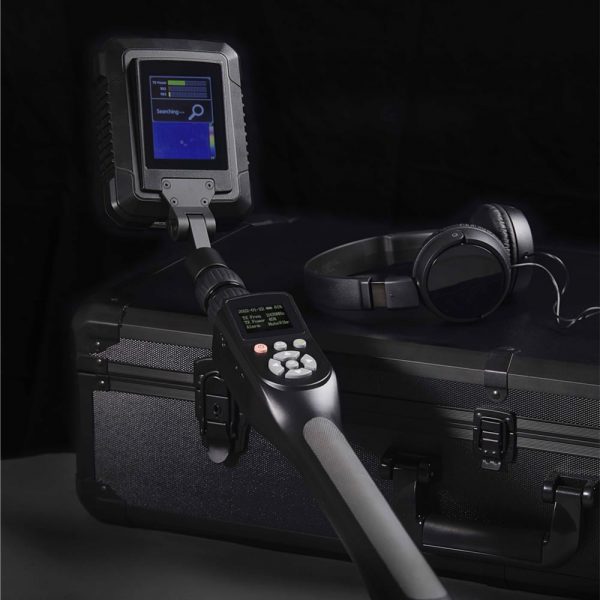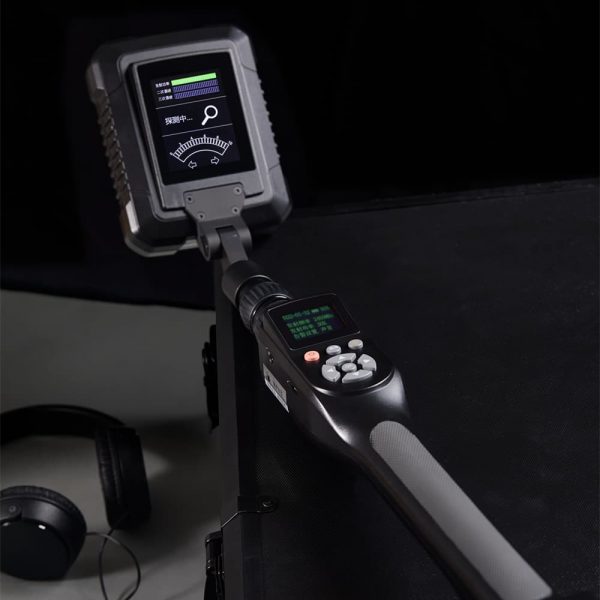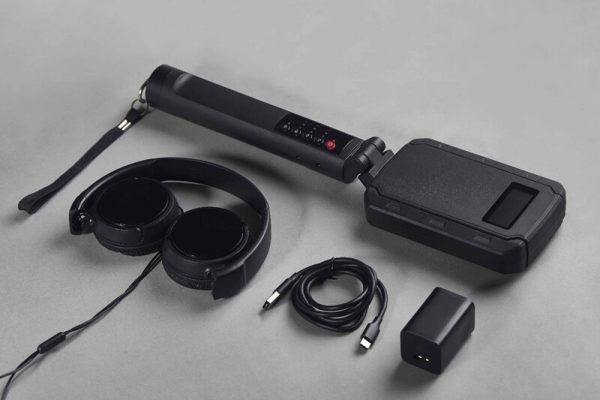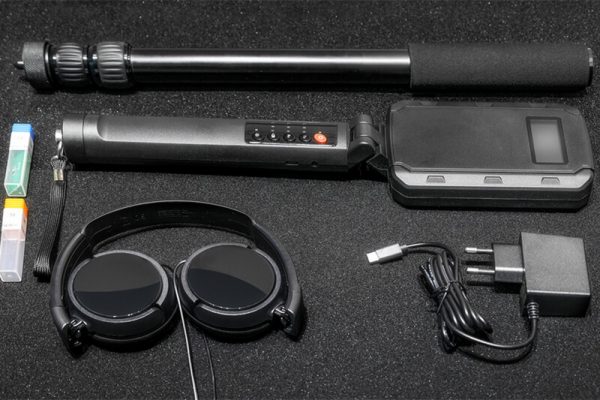
In today’s world, where information security and privacy are significant and more concerned, NonLinear Junction Detector NLJDs have become indispensable TSCM equipment for detecting electronic devices, hidden cameras, or any unauthorized electronic surveillance equipment. Selecting the right NLJD is crucial to ensuring optimal performance and accuracy. This article will guide you through the critical factors to consider when choosing a suitable NLJD, focusing on frequency selection, power output, detection sensitivity, and why NLJDs sometimes struggle with cellphone detection. How to Select a Suitable Non linear Junction Detector? Please read this NLJD selection guide.
Understanding NLJDs
Before diving into selection criteria, it’s essential to understand how non linear junction detectors work. NLJDs transmit a high-frequency signal into a target area, which interacts with semiconductor components found in electronic devices. These components produce harmonics (typically the second and third harmonic frequencies), which the detector captures and analyzes to identify the presence of electronic devices. NLJDs are widely used in counter-surveillance, security inspections, and law enforcement. For more information about the junction detection technology, please read our another post:
Counter-Surveillance Guide: Understanding Non Linear Junction Detectors
Key Considerations for Selecting a Suitable NLJD detector
▶ Jump to: Handheld NLJD Models Comparison | Professional NLJD Models Comparison | Procurement FAQ
1. Frequency Selection
The operating frequency of an NLJD is one of its most crucial specifications. It determines the device’s ability to penetrate various materials and detect hidden electronics. Technically speaking, lower frequency, better penetration ability, provided the radio module performance without obvious difference.
Popular frequencies in the industry include: 900Mhz, 3.6Mhz, 2.4Ghz.
900 MHz: Offers good penetration through dense materials such as walls, wood, and concrete. Suitable for detecting electronics hidden in thicker or layered objects. Weak in detecting mini items.
3.6 GHz: High sensitivity to smaller electronic components, making it ideal for detecting compact devices. Shorter penetration depth, which is advantageous for precise detection in smaller areas.
2.4 GHz (Popular TX frequency):Provides a balance between penetration and sensitivity. Commonly used for detecting a wide range of electronic devices in diverse environments. More effective in moderately confined spaces while retaining sufficient penetration.
Choosing the right frequency depends on your specific needs. For general-purpose detection, 2.4 GHz is a versatile choice. For deeply hidden devices, 900 MHz may be better, while 3.6 GHz is excellent for pinpointing smaller electronics. This is not 100% assured that 800Mhz NLJD is better than 2.4Ghz concerning penetration ability, because each brands’ RF performance maybe varied. Sometimes, we may see, a 2.4GHz NLJD reaches better penetration performance on 900Mhz NLJD in a test scenario.
2. Power Output and Detection Sensitivity
The power output of an NLJD affects its ability to generate harmonics in the target electronics, while detection sensitivity determines its ability to capture weak harmonic signals.
Power Output: Higher power output enhances the range and penetration capability of the NLJD. Excessive power can cause interference, false positives, or damage to sensitive electronic components. Look for devices with adjustable power settings to fine-tune performance based on the environment. However, as the power level increases, the sensitivity of the unit will decrease.
Detection Sensitivity: High sensitivity is essential for detecting weak harmonic signals from small or low-powered electronic devices, such as sim cards, micro sd cards. Advanced NLJDs feature selective filtering to minimize noise and enhance detection accuracy. Ensure the detector can differentiate between second and third harmonics to reduce false alarms. Currently, the best receiving sensitivity is -140dbm.
3. Portability and User Interface
An effective NLJD should be easy to operate and transport. Key features to look for include:
Ergonomic Design: Compact and lightweight models reduce user fatigue during extended operations.
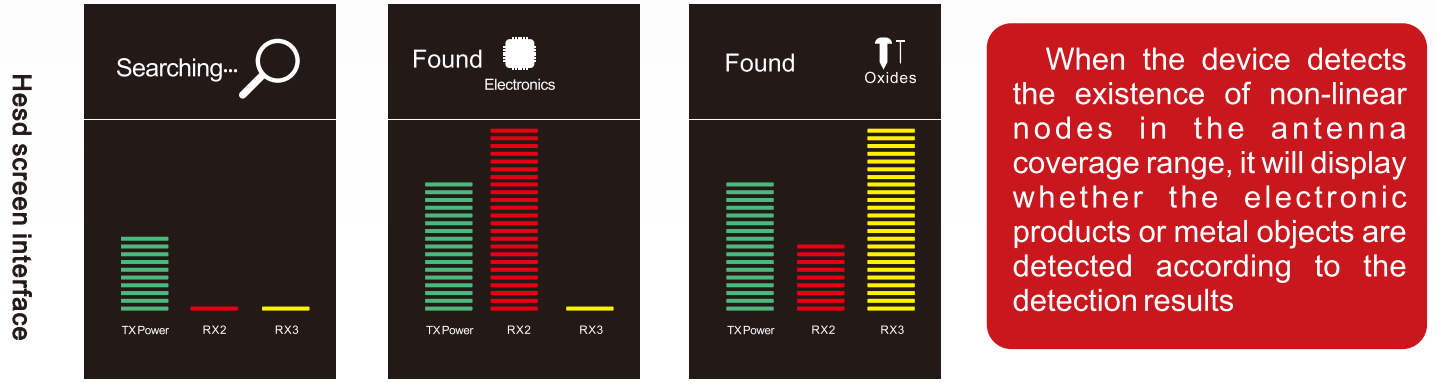
Display and Indicators: Clear visual or auditory indicators for detecting harmonics, with an intuitive interface.
Battery Life: Long-lasting batteries or quick recharge options are vital for prolonged use in the field.
Additional Features to Consider
When selecting an NLJD, look for these advanced features that can enhance performance:
Adjustable Gain Control: Enables fine-tuning of sensitivity to minimize false positives.
Data Logging: Allows you to record detection results for further analysis or reporting.
Multi-Frequency Operation: Some NLJDs can switch between multiple frequencies to adapt to different scenarios.
Built-in Filters: High-quality filters can reduce interference from ambient RF signals.
Generally speaking, choosing the right non linear junction detector requires careful consideration of factors such as frequency selection, power output, detection sensitivity, and the specific challenges associated with detecting certain devices like smartphones. By understanding these aspects and aligning them with your operational requirements, you can select an NLJD that meets your needs effectively. Investing in a high-quality NLJD not only enhances your ability to detect hidden electronics but also ensures the safety and security of your environment.
Global NLJD Manufacturing: Key Players and Market Insights
Non-linear junction detectors (NLJDs) are advanced devices designed to identify concealed electronic circuits, playing a critical role in security operations. Their reliance on cutting-edge technology limits production to a select few nations with specialized expertise. Currently, Russia, USA, China, and the UK. lead global NLJD manufacturing, leveraging their technological infrastructure to meet demand from defense, law enforcement, and security sectors.
As electronic surveillance threats escalate, these countries remain pivotal suppliers, driving innovation and maintaining dominance in this niche yet vital market. Their strategic capabilities ensure ongoing advancements in NLJD technology, addressing evolving security challenges worldwide.
Before comparing models, consider these key factors:
- Your Application: Is it for simple office sweeps or high-security government use?
- Portability vs. Power: Do you need a lightweight, portable device or a high-power professional model?
- Budget: Are you looking for an entry-level solution or a top-tier detector? Answering these questions will help you find the perfect model in our comparison below.”
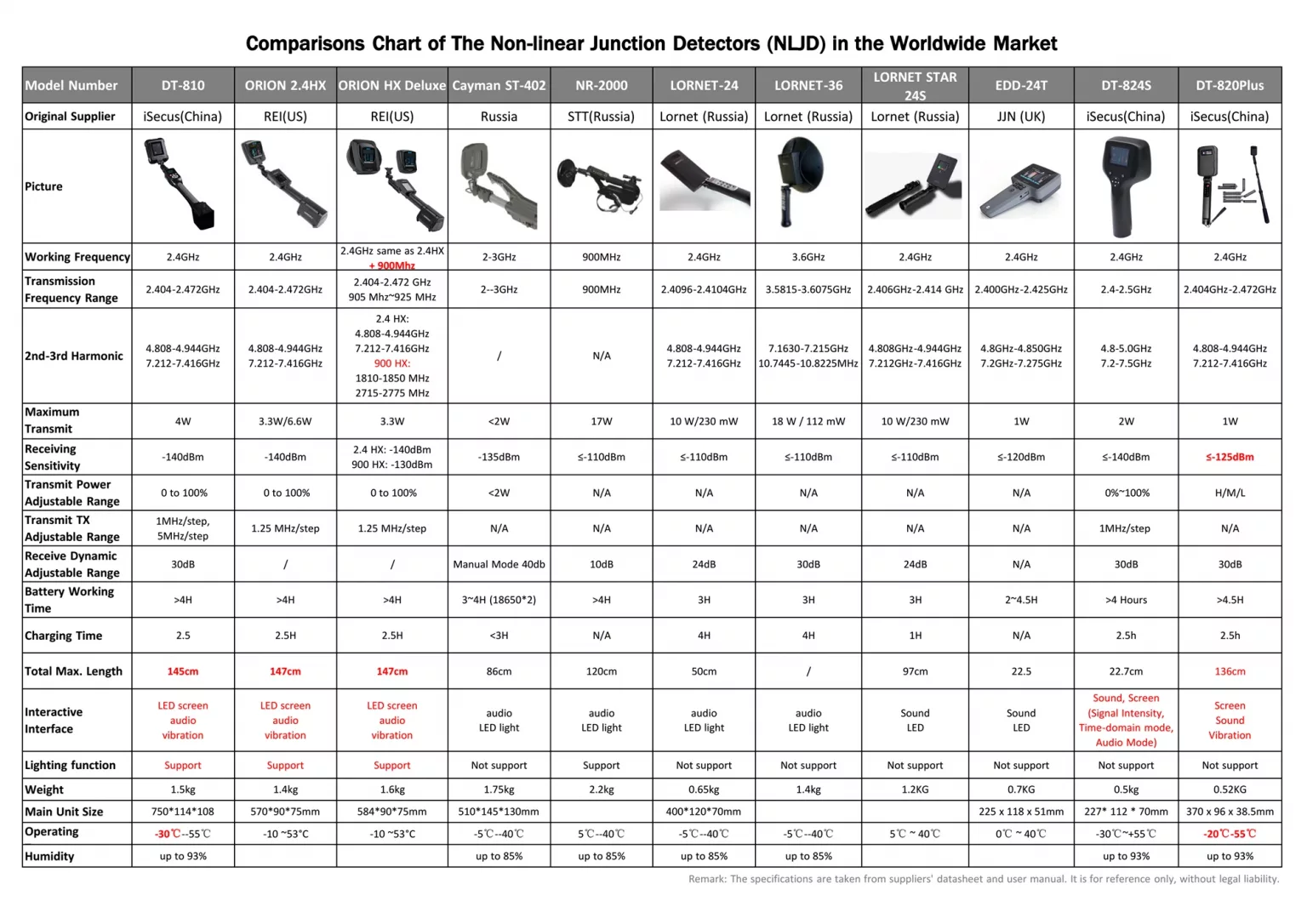
Here some popular NLJD models are listed below with a general comparison on the configuration.
Best Portable Nonlinear Junction Detectors for General Use:
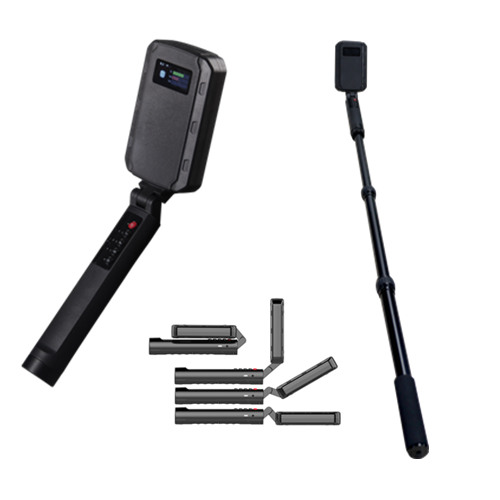
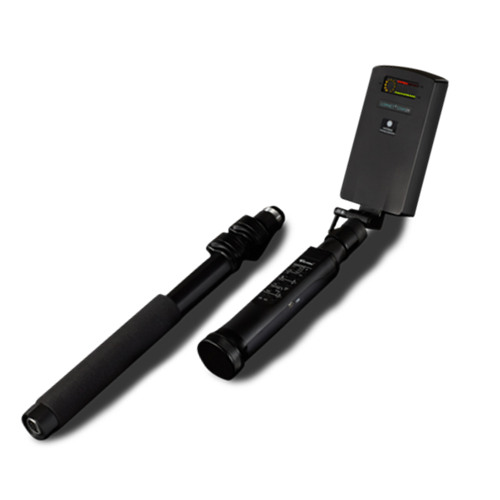
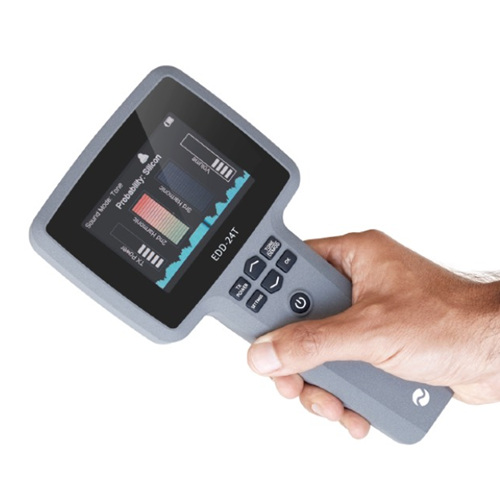
If you are looking for portable/handheld NLJD for simple environment, can consider DT-820Plus, Star24, EDD-24.
Portable Non-linear Junction Detectors for projects where the application environment is not complicated
Model
Brand
Frequency
Receiving Sensitivity
Power Consumption
Operating Time(Pulse)
Alarm
Extendable Pole
Equipment Body Weight
Working Environment
DT-820Plus
iSecus (China)
2.404GHz – 2.472GH
≤-125dBm
1W (Max.)
≥4.5H
Screen Alert, Sound, Vibration
80-136cm Extendable
0.5KG (Without Rod)
-20℃-55℃
Star24
Lornet(Russia)
2.406GHz – 2.414GHz
≤-110dBm
10w
3H
Screen Alert, Sound
43-97cm Extendable
1.0 KG (Without Rod)
5℃-40℃
EDD-24T
JJN Digital(UK)
2.400 GHZ to 2.425 GHz
≤-120dBm
1W
4.5H
Screen Alert, Sound
None
0.7KG
-0℃-50℃
Professional High-Sensitivity Nonlinear Junction Detectors with Extendable Pole
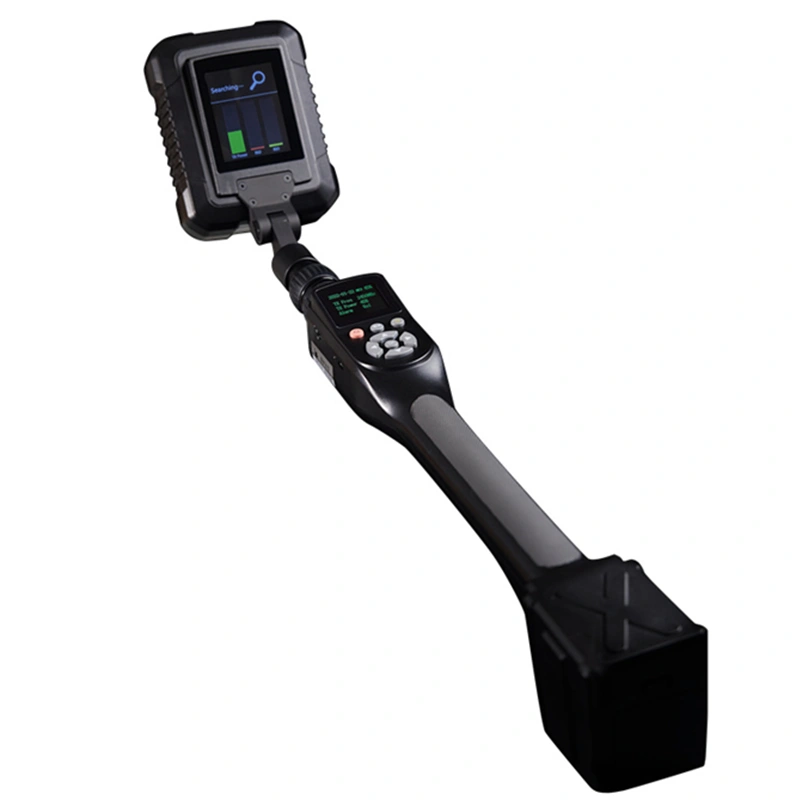
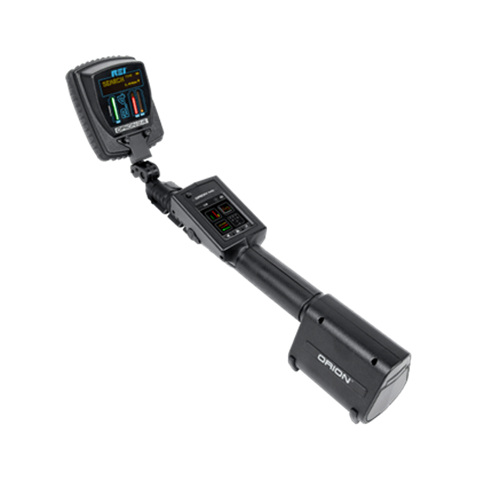
If you are looking for Professional NLJD for complicated environment, can consider DT-810, Orion2.4.
Professional Non-linear Junction Detectors for high-level governmental projects
Model
Brand
Frequency
Receiving Sensitivity
Power Consumption
Operating Time(Pulse)
Alarm
Extendable Pole
Lighting function
Equipment Body Weight
Working Environment
DT-810
iSecus (China)
2.404GHz – 2.472GH
≤-140dBm
4W (Max.)
≥4H
Screen Alert, Sound, Vibration
145cm Extendable
Supported
1.5KG
-30℃-55℃
Orion2.4HX
REI (USA)
2.404GHz – 2.472GH
≤-140dBm
3.3W/6.6W
≥4H
Screen Alert, Sound, Vibration
130cm Extendable
Supported
1.4KG
-10℃-55℃
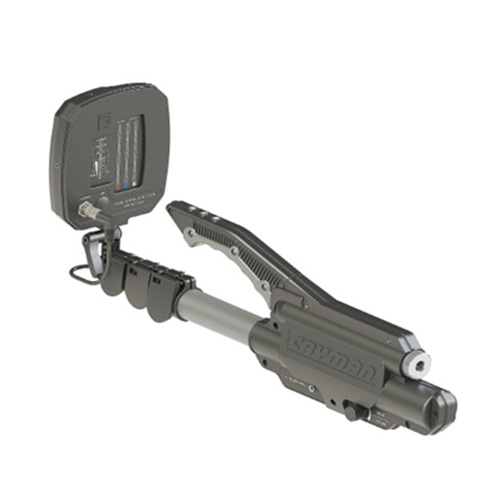
ST-402
Cayman (Russia)
2-3GHz
≤-140dBm
2W
3-4H
Screen Alert, Sound
86cm Extendable
NOT Supported
1.7KG
5℃-40℃
Comparisons Chart of The Non linear Junction Detector NLJDs in the Worldwide Market
| Model Number | DT-810 | ORION 2.4HX | ORION HX Deluxe | Cayman ST-402 | NR-2000 | LORNET-24 | LORNET-36 | LORNET STAR 24S | EDD-24T | DT-824S | DT-820Plus |
|---|---|---|---|---|---|---|---|---|---|---|---|
| Original Supplier | iSecus(China) | REI(US) | REI(US) | Russia | STT(Russia) | Lornet (Russia) | Lornet (Russia) | Lornet (Russia) | JJN (UK) | iSecus(China) | iSecus(China) |
| Working Frequency | 2.4GHz | 2.4GHz | 2.4GHz same as 2.4HX + 900Mhz | 2-3GHz | 900MHz | 2.4GHz | 3.6GHz | 2.4GHz | 2.4GHz | 2.4GHz | 2.4GHz |
| Transmission Frequency Range | 2.404-2.472GHz | 2.404-2.472GHz | 2.404-2.472 GHz 905 Mhz~925 MHz | 2--3GHz | 900MHz | 2.4096-2.4104GHz | 3.5815-3.6075GHz | 2.406GHz-2.414 GHz | 2.400GHz-2.425GHz | 2.4-2.5GHz | 2.404GHz-2.472GHz |
| 2nd-3rd Harmonic | 4.808-4.944GHz 7.212-7.416GHz | 4.808-4.944GHz 7.212-7.416GHz | 2.4 HX: 4.808-4.944GHz 7.212-7.416GHz 900 HX: 1810-1850 MHz 2715-2775 MHz | / | N/A | 4.808-4.944GHz 7.212-7.416GHz | 7.1630-7.215GHz 10.7445-10.8225MHz | 4.808GHz-4.944GHz 7.212GHz-7.416GHz | 4.8GHz-4.850GHz 7.2GHz-7.275GHz | 4.8-5.0GHz 7.2-7.5GHz | 4.808-4.944GHz 7.212-7.416GHz |
| Maximum Transmit power(Pulse) | 4W | 3.3W/6.6W | 3.3W | <2W | 17W | 10 W/230 mW | 18 W / 112 mW | 10 W/230 mW | 1W | 2W | 1W |
| Receiving Sensitivity | -140dBm | -140dBm | 2.4 HX: -140dBm 900 HX: -130dBm | -135dBm | ≤-110dBm | ≤-110dBm | ≤-110dBm | ≤-110dBm | ≤-120dBm | ≤-140dBm | ≤-125dBm |
| Transmit Power Adjustable Range | 0 to 100% | 0 to 100% | 0 to 100% | <2W | N/A | N/A | N/A | N/A | N/A | 0%~100% | H/M/L |
| Transmit TX Adjustable Range | 1MHz/step, 5MHz/step | 1.25 MHz/step | 1.25 MHz/step | N/A | N/A | N/A | N/A | N/A | N/A | 1MHz/step | N/A |
| Receive Dynamic Adjustable Range | 30dB | / | / | Manual Mode 40db | 10dB | 24dB | 30dB | 24dB | N/A | 30dB | 30dB |
| Battery Working Time | >4H | >4H | >4H | 3~4H (18650*2) | >4H | 3H | 3H | 3H | 2~4.5H | >4 Hours | >4.5H |
| Charging Time | 2.5 | 2.5H | 2.5H | <3H | N/A | 4H | 4H | 1H | N/A | 2.5h | 2.5h |
| Total Max. Length | 145cm | 147cm | 147cm | 86cm | 120cm | 50cm | / | 97cm | 22.5 | 22.7cm | 136cm |
| Interactive Interface | LED screen audio vibration | LED screen audio vibration | LED screen audio vibration | audio LED light | audio LED light | audio LED light | audio LED light | Sound LED | Sound LED | Sound, Screen (Signal Intensity, Time-domain mode, Audio Mode) | Screen Sound Vibration |
| Lighting function | Support | Support | Support | Not support | Support | Not support | Not support | Not support | Not support | Not support | Not support |
| Weight | 1.5kg | 1.4kg | 1.6kg | 1.75kg | 2.2kg | 0.65kg | 1.4kg | 1.2KG | 0.7KG | 0.5kg | 0.52KG |
| Main Unit Size | 750*114*108 | 570*90*75mm | 584*90*75mm | 510*145*130mm | 400*120*70mm | 225 x 118 x 51mm | 227* 112 * 70mm | 370 x 96 x 38.5mm | |||
| Operating Temperature | -30℃--55℃ | -10 ~53°C | -10 ~53°C | -5℃--40℃ | 5℃--40℃ | -5℃--40℃ | -5℃--40℃ | 5℃ ~ 40℃ | 0℃ ~ 40℃ | -30℃~+55℃ | -20℃-55℃ |
| Humidity | up to 93% | up to 85% | up to 85% | up to 85% | up to 85% | up to 93% | up to 93% |
(Remark: The specifications are taken from suppliers’ datasheet and user manual. It is for reference only, without legal liability.)
Conclusions of Non linear Junction Detectors Selection Guide among those popular models:
- If project spec requires 900Mhz, please consider REI and STT NLJD.
- If requires 3600Mhz NLJD, option is very limited.
- If budget is limited and need NLJD with extendable pole, consider DT-820Plus and Lornet NLJD detectors.
- If need dual frequency, by now, ONLY Orion HX Deluxe can meet.
- If budget is not very tight, while needs top-tier NLJD at high configuration, can consider Orion2.4, DT-810.
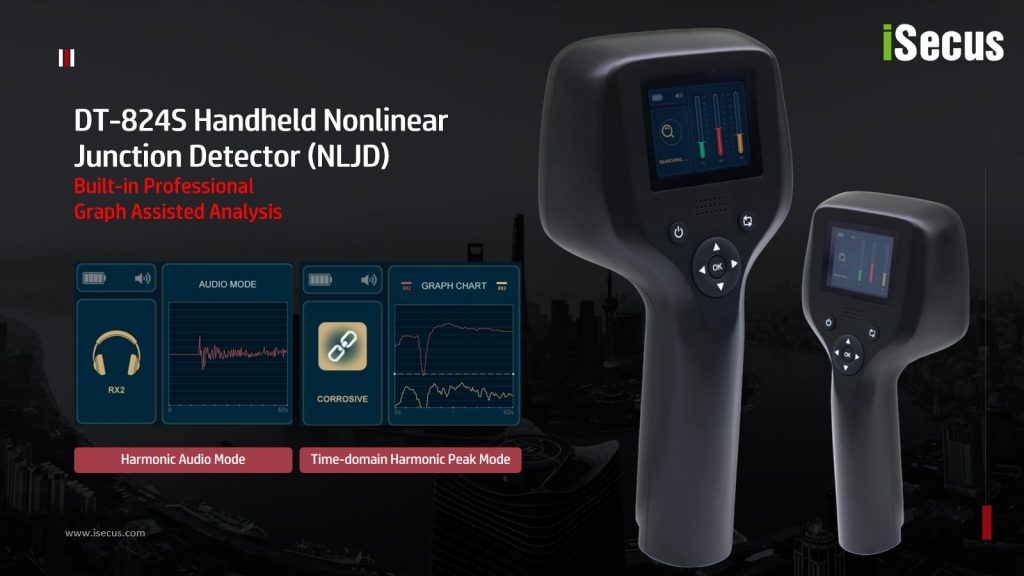
- If need a handheld NLJD for indoor use, can consider DT-820, DT-824S, EDD 24.
NLJD detector is a NICHE market, no many options. When choosing a suitable NLJD, please consider the target applications environment, Max. Power Level, Receiving sensitivity, Professional one or Handheld one, Budget level, etc. It will be not difficult to make a decision.
FAQ related to Nonliner Junction Detector NLJDs Selection?
1). There are 900MHz & 2.4GHz & 3.6GHz NLJD — which should I choose?
- Answer: Nonlinear Junction Detectors typically operate in the 2.4 GHz band which is the main-trend adopted by USA/European/Chinese suppliers. For most projects/applications, 2.4GHz NLJD can meet the requirement. Or if budget is not a question, can consider dual-module NLJD.
2). How do I choose between a handheld NLJD and a professional pole-mounted model?
- Answer: Handheld nonlinear junction detector models (such as iSecus DT-820 & DT-824S or JJN EDD-24) are compact and ideal for quick inspections, travel, or inspecting personal items and small spaces. Pole-mounted professional models are better suited for systematic sweeps of rooms, walls, and large furniture. For government or enterprise-level projects requiring thorough inspections, a pole-mounted model is strongly recommended.
3). Can a first-time buyer operate an NLJD without prior TSCM training?
- Answer: NLJD requires a learning curve. Entry-level models with visual display guides (such as iSecus DT-820/DT-820Plus) are more accessible for new operators, as the settings is very simple and the LCD screen will display detection result directly. However, for professional TSCM projects- higher level NLJD would be needed and more settings are available for complicated environment. Although the operation of NLJD itself would be not complicated, the operator’s sweeping experience & skills & knowledge is significant. NLJD works like a sword. A fresh operator and an experienced operator, even using the same equipment, the detection result & efficiency will be varied a lot.
4). What is the realistic detection range of an NLJD, and what affects it?
- Answer: In field conditions, typical 2.4GHz NLJD, the effective detection range typically falls between 15–40cm for most targets, depending on 3 factors: the sensitivity of the NLJD (measured in dBm — lower is better), the shielding material around the target device, and operator technique. The iSecus DT-810 achieves -140dBm sensitivity, one of the highest in its class, making it effective even for heavily shielded devices.
5). Is iSecus NLJD compatible with government and military procurement requirements?
- Answer: Yes. iSecus NLJD equipment has been successfully deployed in government, military, police, prisons and law enforcement projects across 30+ countries. Our products support OEM customization, volume procurement pricing, and technical documentation for formal tender processes. Contact our team directly for compliance documentation or project-specific quotations.
6). What is the price range for a professional NLJD, and what drives the cost difference?
- Answer: From NLJD manufacturer’s point of view, investing like USD10000 on a NLJD equipment is very common. If anyone is looking for a NLJD at price like 3000USD, 4000USD, this is almost impossible to get a brand-new NLJD with good performance. The main cost drivers are detection sensitivity (dBm rating), detection algorithm, integrated features (such as the DT-830’s built-in thermal camera), build quality, and brand. iSecus offers competitive pricing across all tiers without compromising on performance — contact us for a project-specific quotation.
7). Can I purchase NLJD equipment directly from iSecus, or only through distributors?
- Answer: iSecus sells directly to security companies, TSCM service providers, government procurement departments, and enterprise clients worldwide. We also work with authorized distributors in select regions. Contact our sales team to discuss the best procurement option for your organization.